

.png)

History
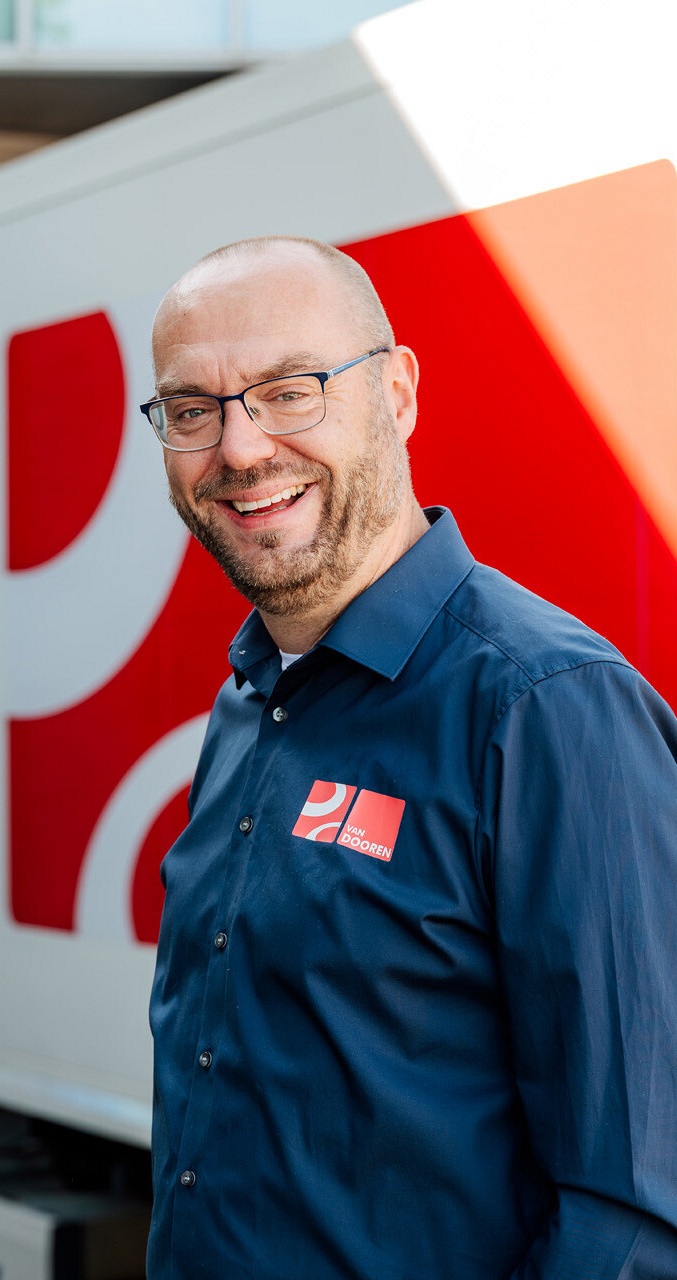
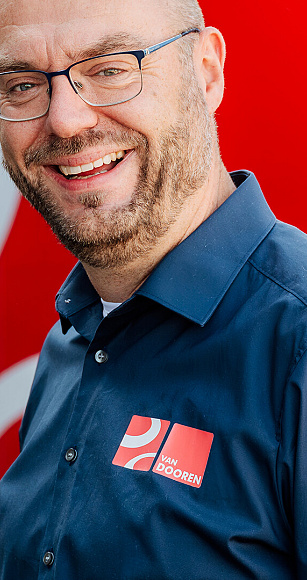
130 years of Van Dooren: from carriage to chain management (1895–2025 and beyond)
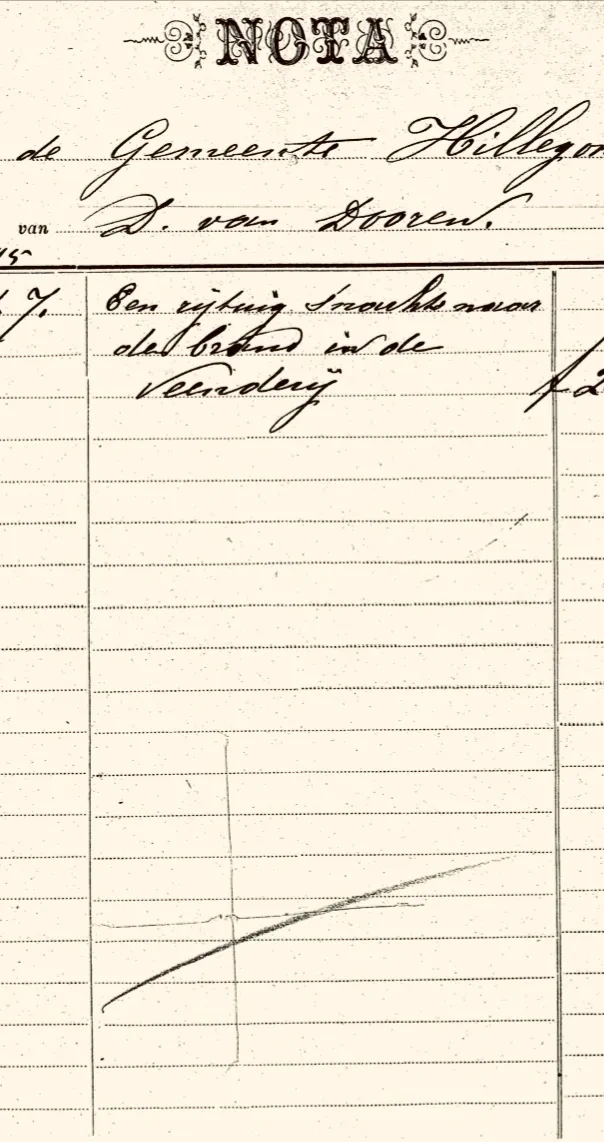
1895. The year of Popov’s radio telegraphy, the Lumière brothers’ first film, Röntgen’s discovery of X-rays—and the year in which Dirk van Dooren, at the age of 39, sent his first invoice: 2.50 guilders to the municipality of Hillegom for transporting the mayor by carriage to a fire in the Veenderij (Weerlanerpolder). That document marks the official start of our family business, which celebrated its 125th anniversary on September 7, 2020.
How it began
Dirk (born October 25, 1856, in Dordrecht) lived in the Hoekse Waard region (including Mijnsheerenland and Puttershoek) for a long time. In 1881, he married Elizabeth Martina Muller; they had five children. As the personal coachman of Mayor M.W. de Kat, Dirk moved to Hillegom in 1882. After thirteen years, De Kat retired and Dirk decided to take his future into his own hands: from coachman to owner of his own livery stable—caring for horses and stabling/maintaining carriages for wealthy Hillegom residents.
The rise of bulb cultivation
Around 1900, Jurrian (Jurriaan) Gerrit van Dooren followed in his father's footsteps. Hillegom grew to become the center of flower bulb cultivation; dune lands around De Zanderij were reclaimed to become first-class bulb soil. With this growth, transport movements also exploded: from farmlands to nurseries, from growers to auctions and trading houses. At that time, customers often had their own religious affiliations and relationships were built within those communities. In addition to funerals and weddings, bulb transport quickly became the largest pillar of the business.
From horse and carriage to “the monstrous vehicle”
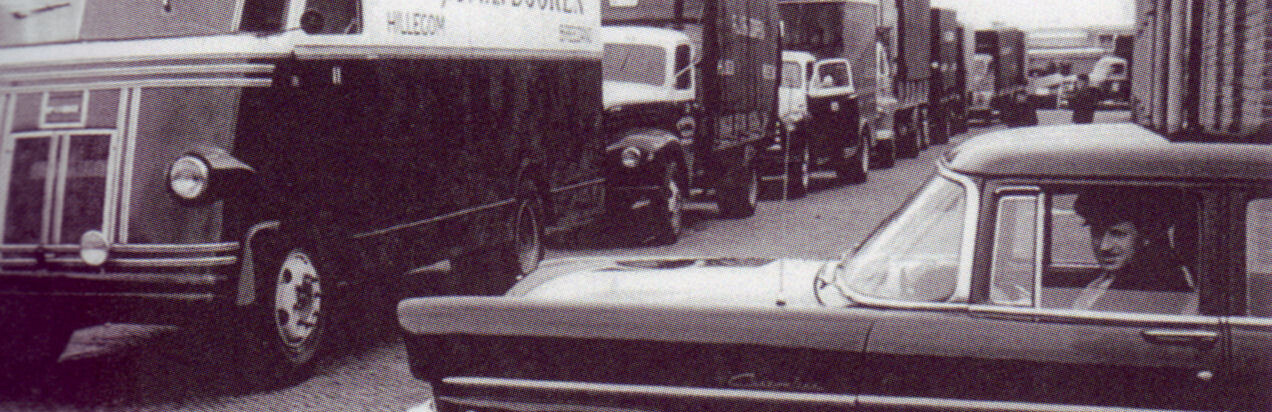
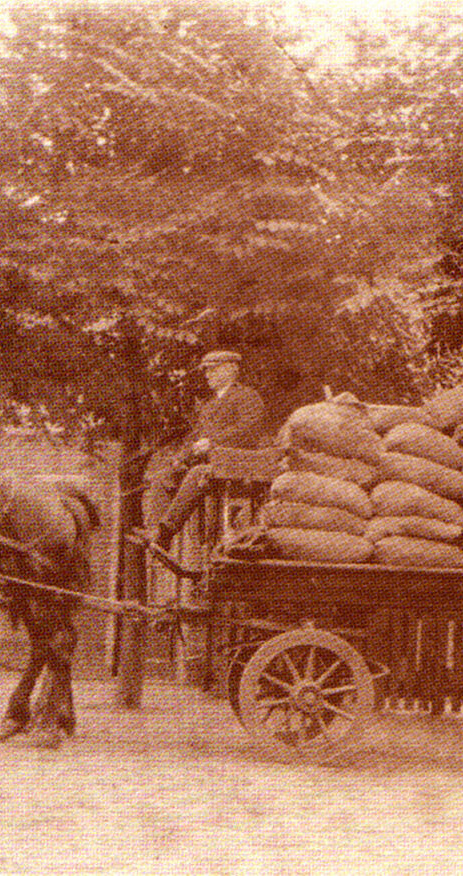
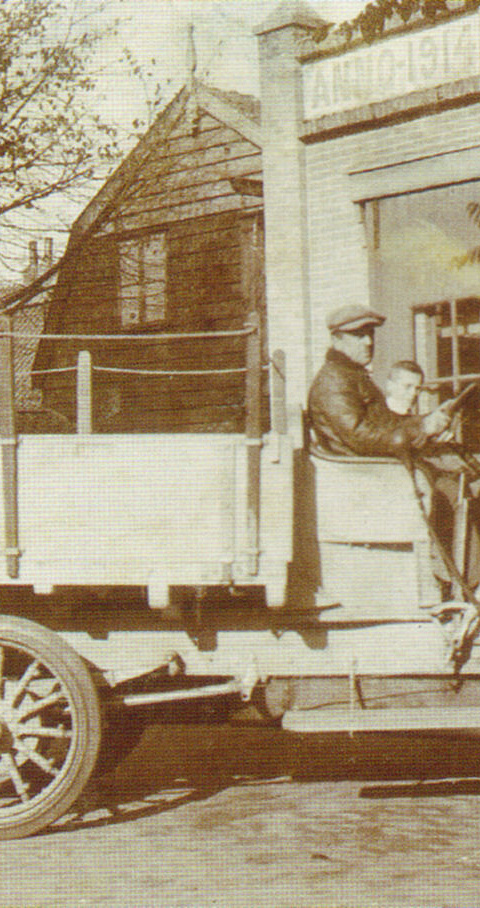
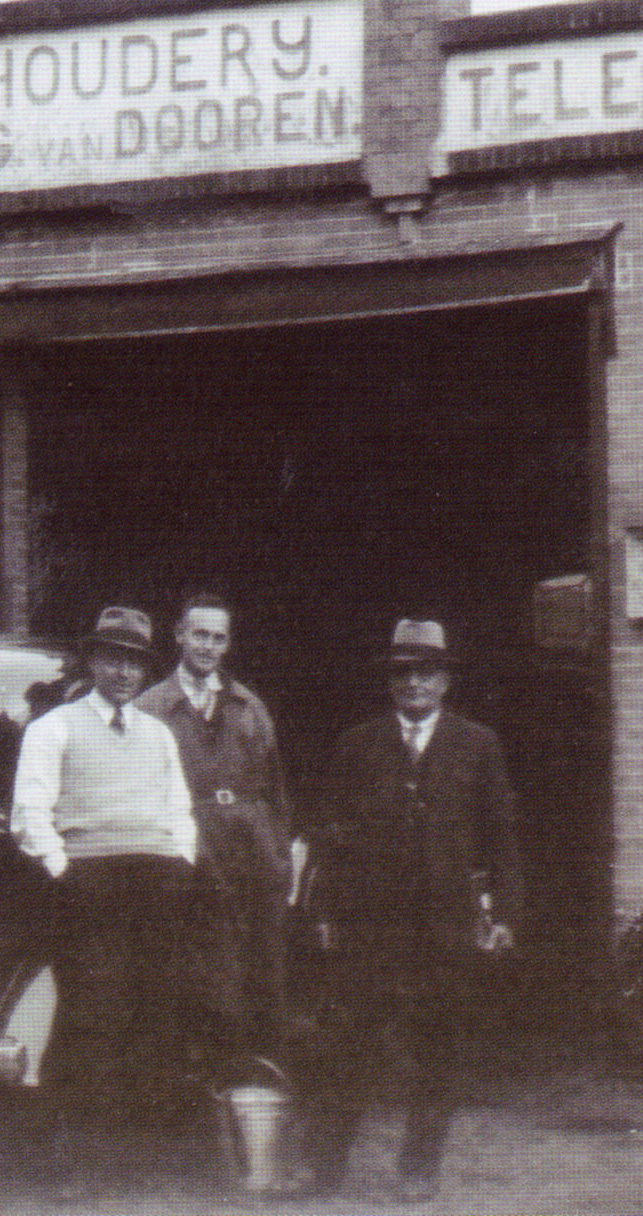
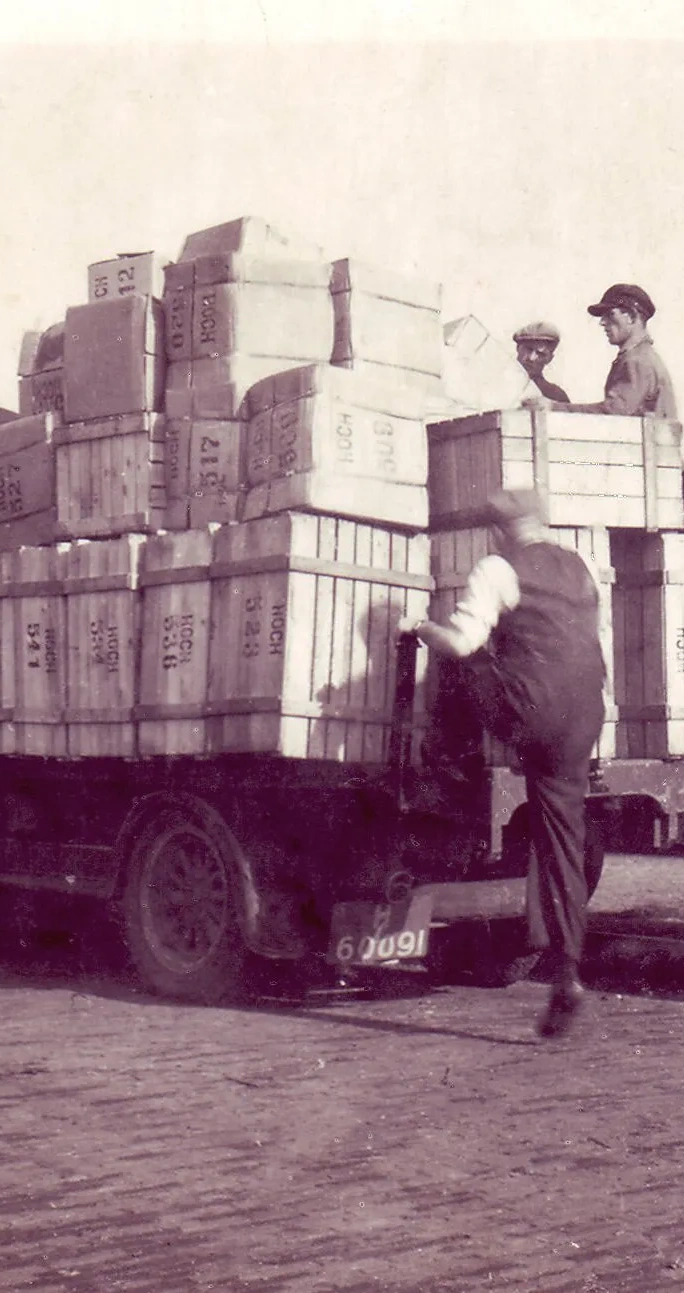
Carriages are ill-suited for carrying baskets, crates, and burlap sacks full of bulbs; that is why the horse and flat cart came into use. At the beginning of the 20th century, the automobile made its appearance. Not everyone was enthusiastic—the *Kleine Kroniek* (1916) called it “the monstrous vehicle.” Between 1906 and 1917, 44 license plates were issued in Hillegom (H = South Holland). To govern is to look ahead: Jurrian Gerrit and Dirk built a car garage (96 m², 3.5 m high) on Molenstraat using sand-lime brick and a concrete foundation to accommodate the increasingly heavy vehicles.
Smart investing and growth
Jurrian Gerrit develops into an entrepreneur and investor and purchases real estate on Hoofdstraat (1919), as well as workers' houses on Molenstraat and in the Molenbuurt neighborhood (total sum: ƒ 6,000). After the First World War, motorization accelerates: by 1930, there are already 30,000 motor vehicles in the Netherlands, with Ford as the major supplier. Road transport is growing rapidly.
Ambulance and taxi
At the end of the 1920s, Van Dooren also started providing ambulance transport. Municipalities had to provide their own transport for the sick and injured; Hillegom opted to collaborate with J.G. van Dooren. In 1927, reimbursement for patient transport by luxury carriage was introduced; the first ambulance arrived in 1929.
VOF, war years, and restart
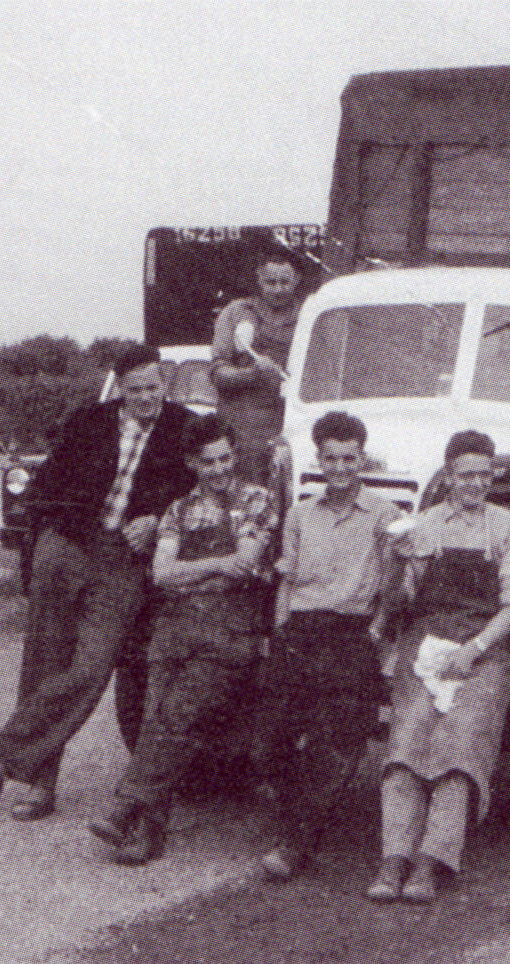
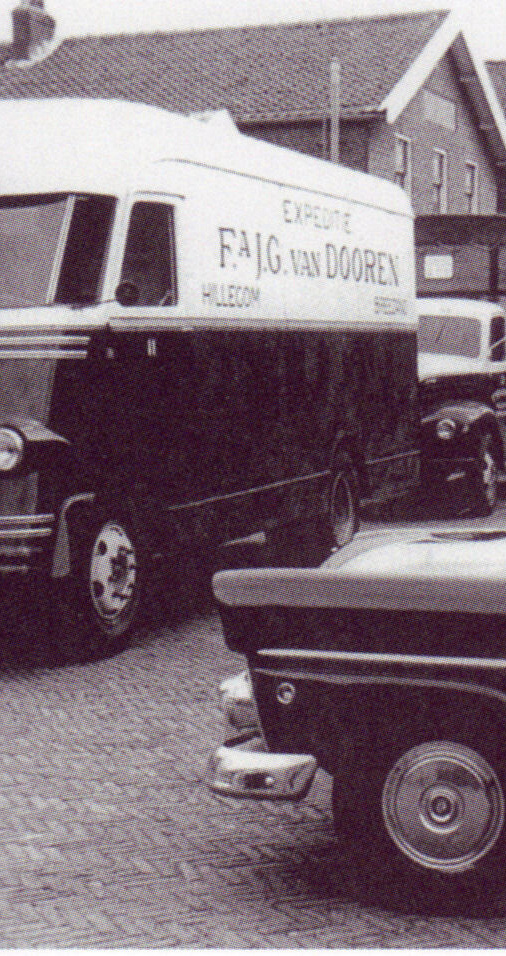
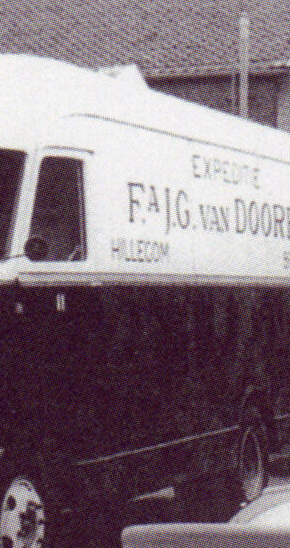
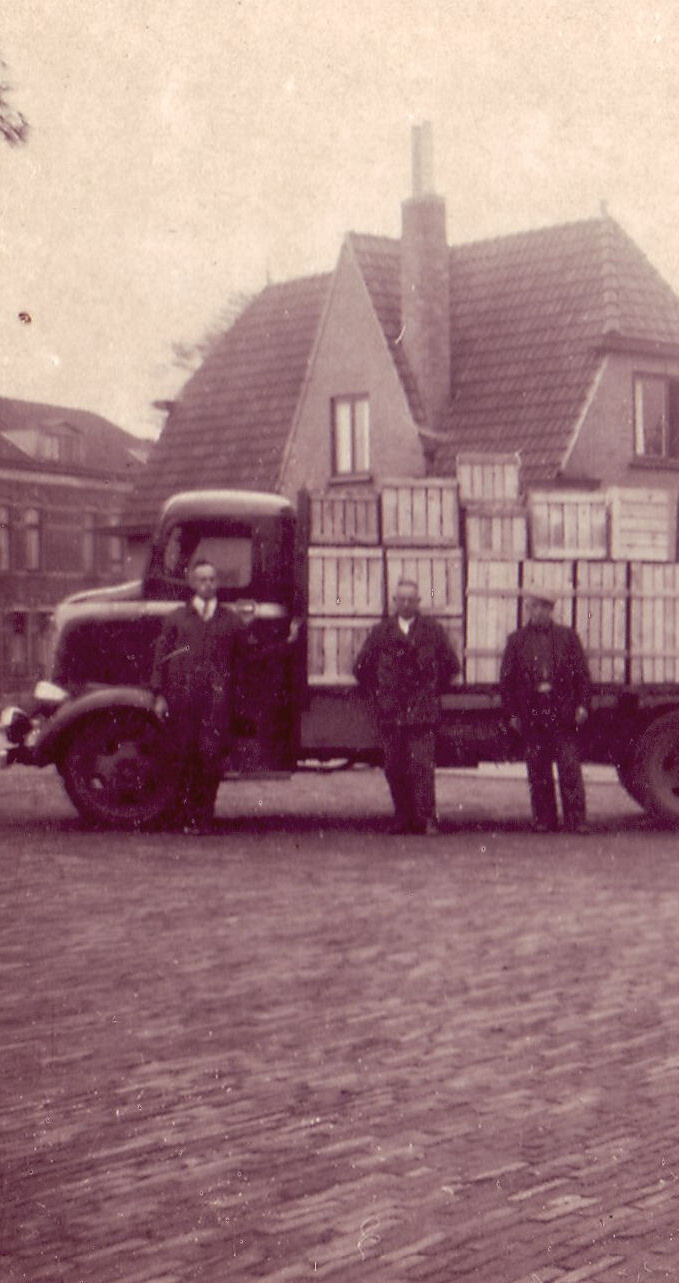
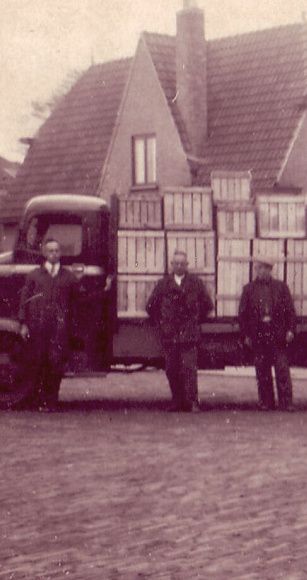
On April 1, 1932, the firm J.G. van Dooren (general partnership) was formally established—“car rental and transportation services in the broadest sense”—with Jurriaan Gerrit and his son Dirk as partners, with offices on Molenstraat in Hillegom. After Jurriaan’s death (1933), the firm continued in 1934 as the J.G. van Dooren Taxi and Freight Forwarding Company under Dirk’s leadership. During World War II, many vehicles were requisitioned; those not requisitioned ran on wood gas due to the oil crisis.
Strategically to the Kop van Noord-Holland
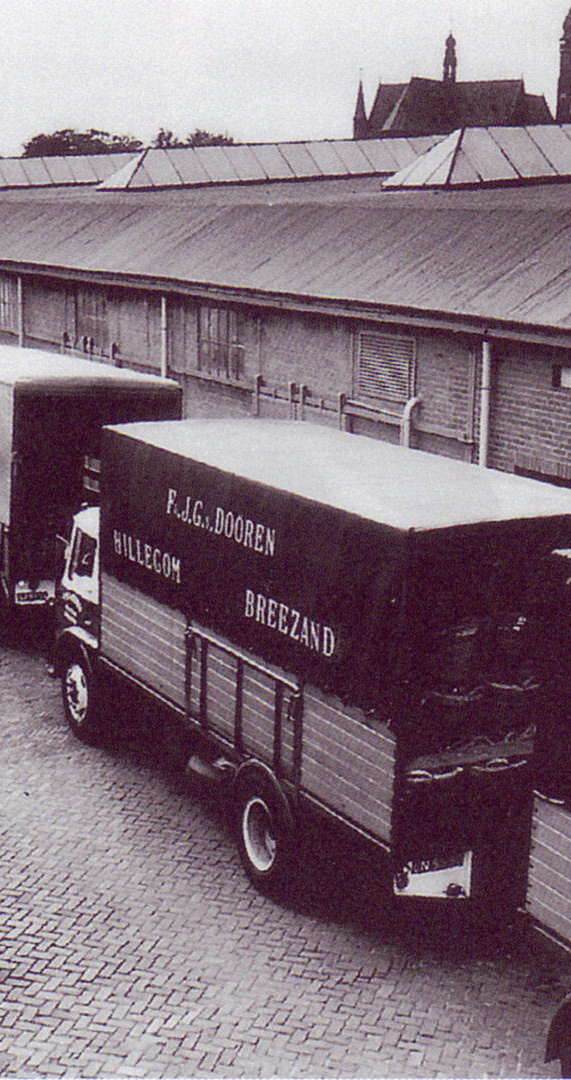
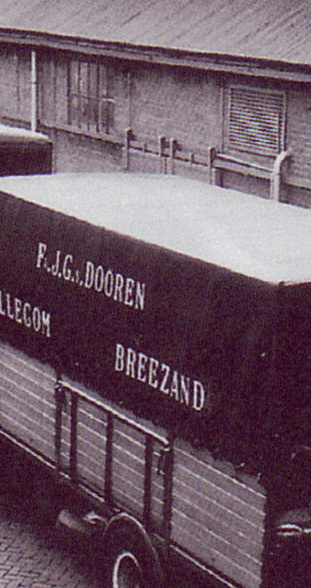
On May 23, 1949, Gebr. Van Trigt (Breezand) was taken over: a regular service between Hillegom ↔ Alkmaar ↔ Anna Paulowna ↔ Koegras ↔ Texel. This was in line with the trend of growers moving to the Kop van Noord-Holland. In 1951, W. Meijer (Breezand) joined the company. Between 1952 and 1953, major additions were made in Hillegom: a new office above the garage, demolition of old sheds, construction of a new shed and workshop, a separate area for ambulances, taxis, and maintenance, plus rear access via Hoofdstraat 128.
Assistance during the North Sea Flood
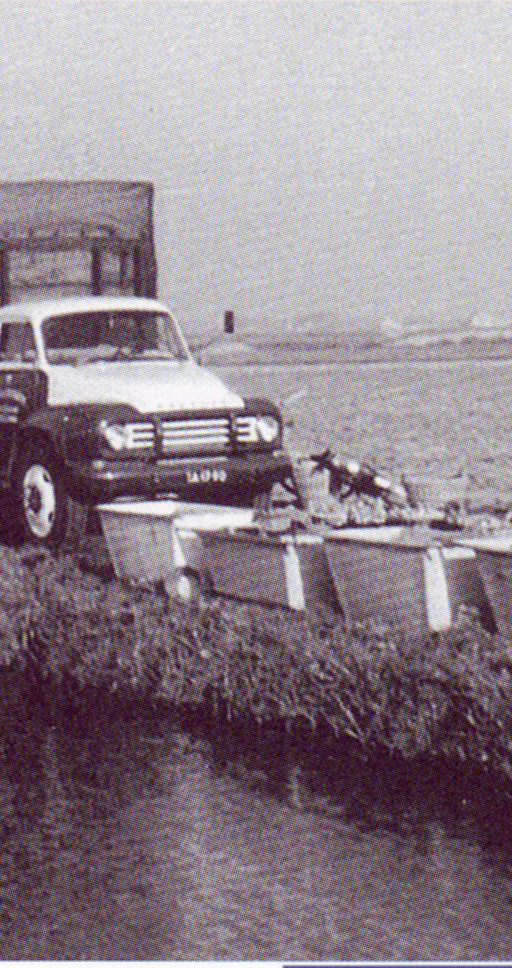
During the North Sea flood disaster (1953), Dirk van Dooren organized aid transports with collected goods—helpfulness is clearly in the DNA of the company and the family (firefighting tradition).
Focus on core business
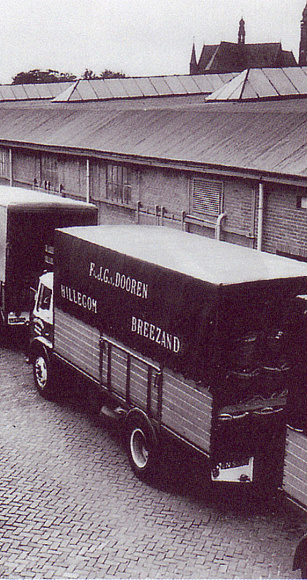
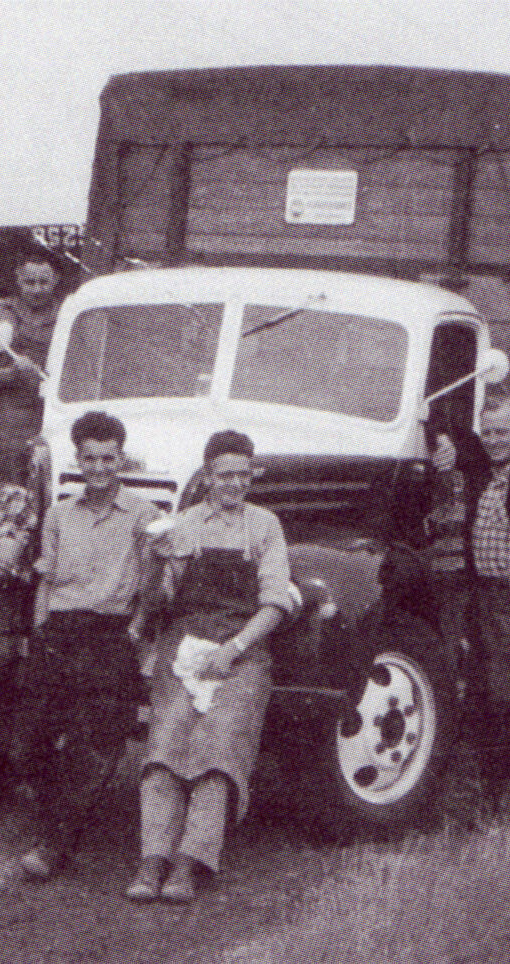
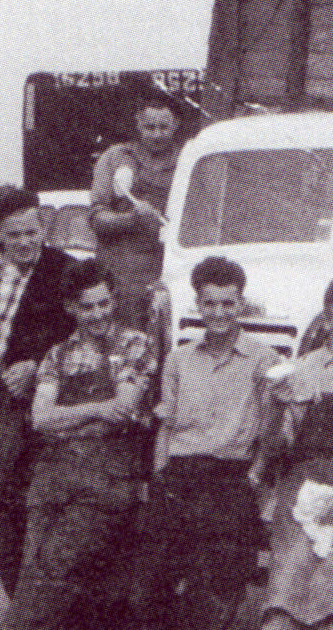
On March 1, 1986, Van Dooren ceases taxi and ambulance transport services to focus entirely on flower bulbs, plants, and tree nursery products. Staff transfer to A Tax de Vries. The fourth generation (Jur, Dick, Ron) takes over; in 1977, father Dirk (gen. 3) passes away. After growth, the Molenstraat became too small; in 1988, a new building was constructed on the Voltstraat.
Generation 5, Greenlog, and new construction
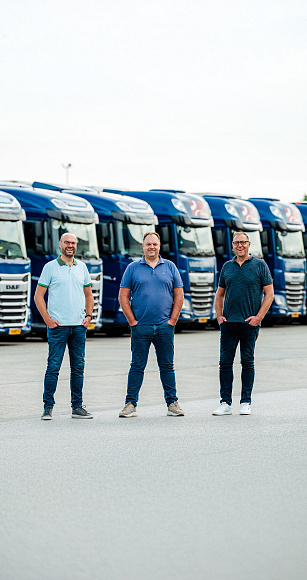
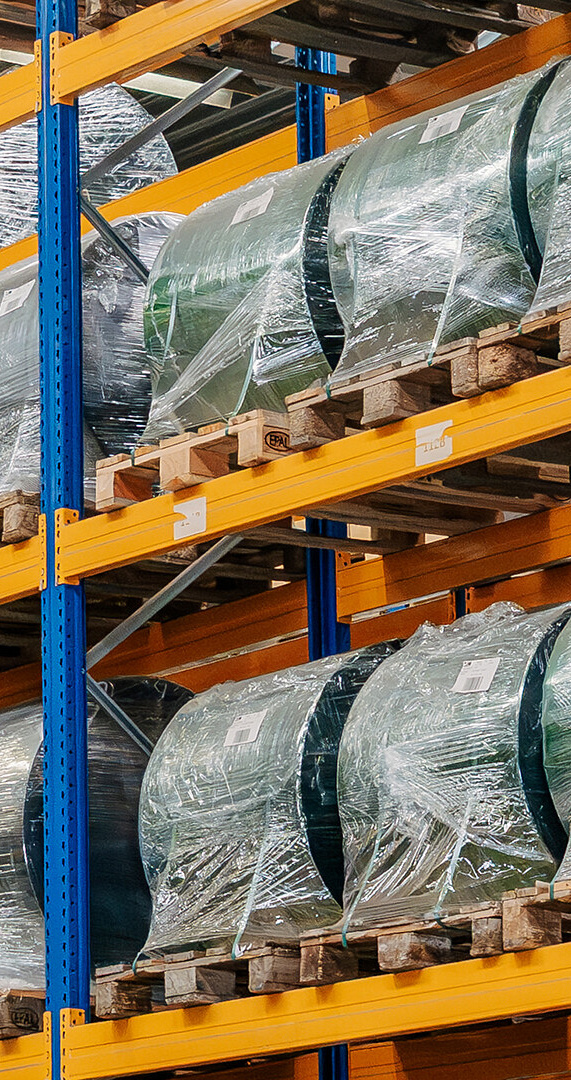
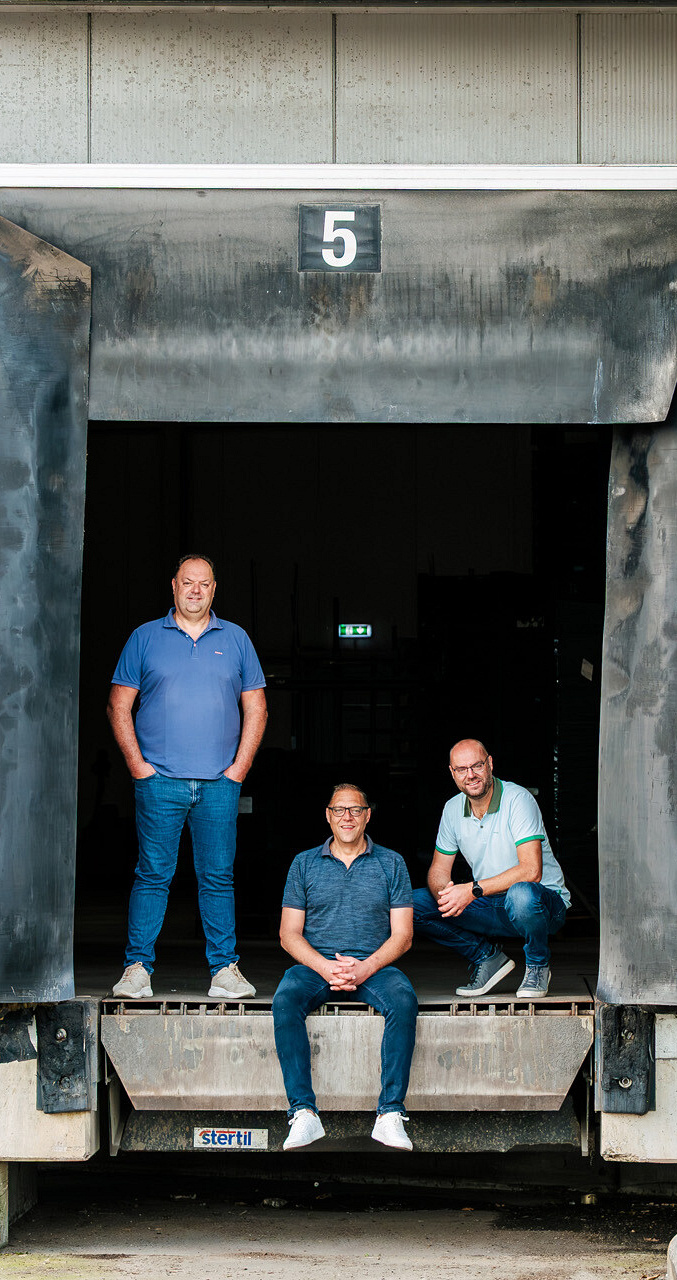
After Ron's death (2003), Dick (1973), Alex (1976), and Jurgen (1978) took over the reins. Market dynamics changed (auctions disappeared) and shipments became smaller. Together with colleagues Wesseling and Bakker & Schilder, Greenlog was set up: bundling, combining, grouping. In 2008, the warehouse (5,000 m²) opened at Achter de Watertoren—10 docks, high-quality cross-dock, packaging management for ~50 exporters, own workshop with MOT street and tachograph calibration.
Strategic acquisitions & internationalization
Acquisitions strengthen our position in what we do best: bulb logistics.
- 2005 Rademaker (Zeeland islands/West Brabant/Zeeland)
- 2007 customers Wesseling (NH) and Hollander (Breezand)
- 2013 bulb activities AB Texel and J. Bakker & Zn (Egmond)
- 2018 Urselmann Transport (Bergen, Limburg) → additional location
- 2014 Acquisition of Entege Nederland → launch of Van Dooren Forwarding B.V. (international temperature-controlled transport, including DE/CH) and year-round in-house work

Digitization and craftsmanship
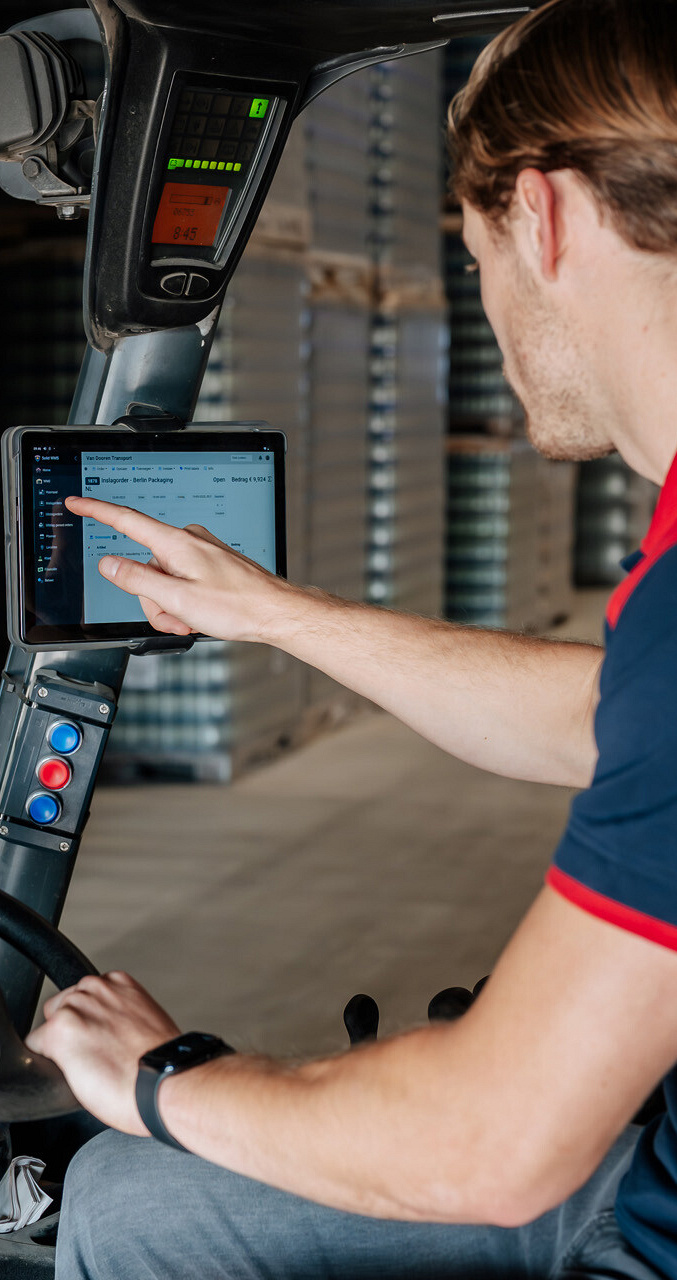
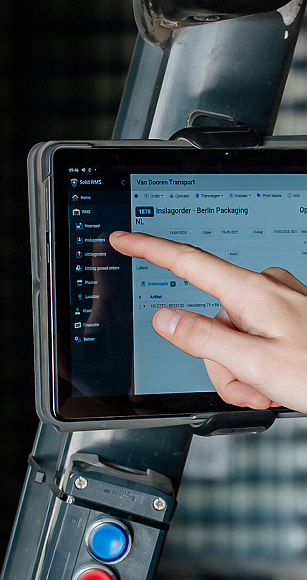
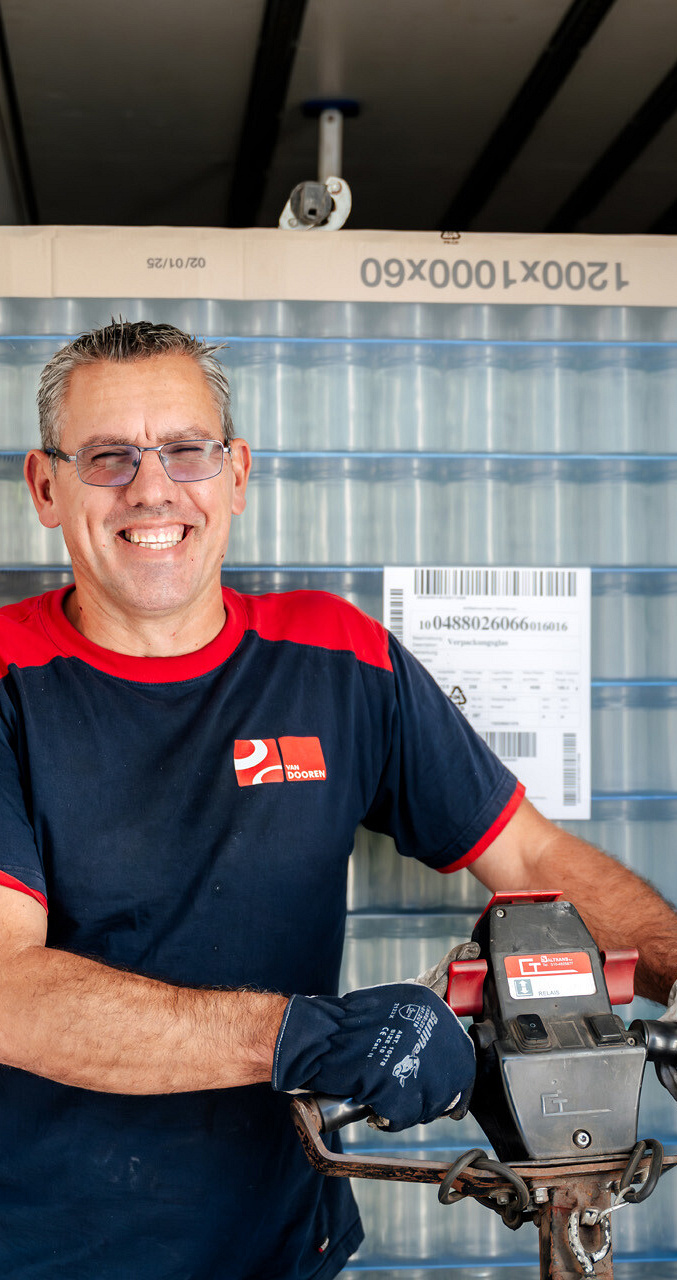
Rapid growth requires solid IT: TMS, Van Dooren Customer app, Driver app, on-board computer/track & trace, and links to charters. Craftsmanship remains the foundation: many long-serving employees (12.5/25/40+ years) and strong regional ties (Bollenstreek, Kop van NH, North Limburg).
Contribution to the sector
Van Dooren has been active in the Flower Parade (since 1947), sponsors lily and tulip inspections and the Black Tulip Museum, is a recognized training company, and is represented on various boards (including TLN; Alex in regional and national committees).
Purveyor to the Royal Household & future
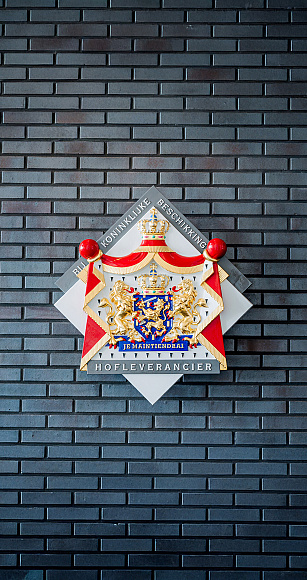
In June 2020, His Majesty the King decided that Van Dooren may bear the Royal Coat of Arms with the addition “By Royal Decree, Purveyor to the Royal Household.” The award was presented on September 5, 2020, by the King’s Commissioner, in the presence of the mayor of Hillegom.
After two world wars and COVID-19, the course remains the same: not the biggest, but the best—investing in what you’re good at and with a passion for the sector. Onward to 150 years

Need more information?
Leave a message and we will contact you.