14 April 2026
Truck tolls in the Netherlands from 2026: what will change?
The truck toll will be introduced in the Netherlands in mid-2026. On this page, we will discuss the associated changes.

.png)

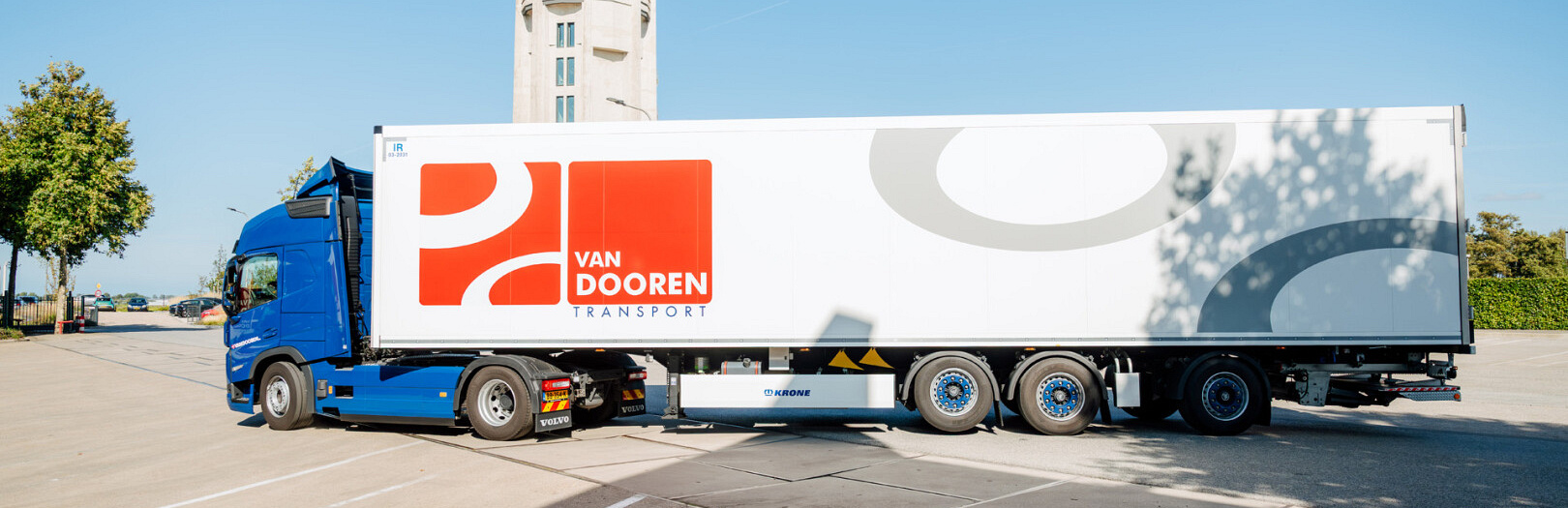
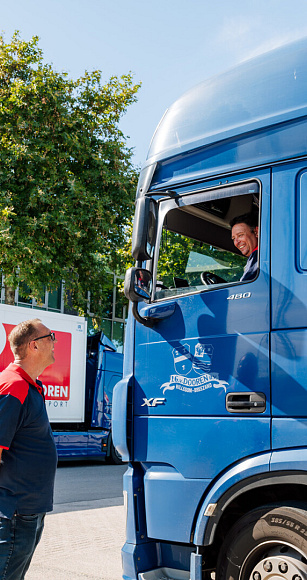
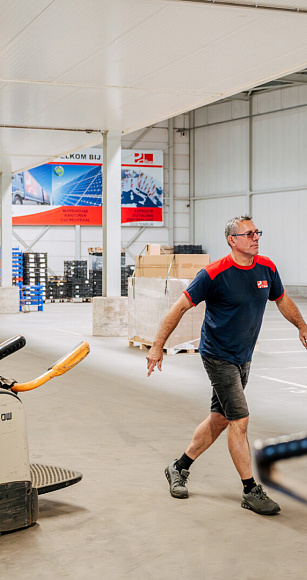
The two flower bulb transporters will integrate the planning and execution of flower bulb transport this summer season. After years of collaboration through the exchange of freight, the two companies have decided to centralize their flower bulb planning. This integration will enable them to carry out transport more efficiently. Van Dooren Transport will be responsible for management, planning, and administration. To continue to guarantee service and quality, AB Texel will continue to provide trucks and drivers during the bulb seasons.
Seasonal Influences
The transport of flower bulbs is highly seasonal. Spring bloomers (e.g., tulips, hyacinths, daffodils, crocuses, etc.) are harvested from mid-June and delivered to export and trading companies in June, July, and August. Summer bloomers (e.g., lilies, dahlias, gladioli, etc.) are harvested from October and most are delivered before Christmas. Two seasons are completed in six months. Mother Nature naturally lends a helping hand (or a helping hand). An early and warm spring means a long, drawn-out summer season. A late spring means a short but intense summer season. Because by mid-August, the entire spring blooming area must have changed hands. During the season, we operate with a large, flexible team of permanent and temporary charters who participate in the schedule daily. For example, on busy days, we operate with more charters than our own 42 trucks. You can understand that this poses a significant challenge for our planners and logistics systems.
Planning
Our customers submit their orders for the next business day at the end of the working day. This means that around 3:00 PM, we still have little volume in the planning screen, and by 5:00 PM, our planners might have to search for additional capacity for the following business day. Of course, we can predict a lot with historical data, but there's always the risk of being off by a few percent with our predictions. And a few percent off on 1,000 loading meters to be transported in a day can easily cost us a number of trucks. Finding additional (suitable) capacity has proven to be a significant challenge in recent years due to pressure on the transport market, staff shortages, and other priorities at our regular charters. "You're too late" was a common response from our fellow carriers. And an even bigger problem arises when too much capacity has been purchased for the next day. This increases costs.
Insight
The shortage of transport capacity got us thinking about how we could obtain the right information from our customers. And the answer lay with our customers' IT suppliers. We started inventorying the most commonly used IT packages among our customers. It quickly became clear that the best opportunity for the first step lay with Bulbmanager. Many of our customers use the package for trade, packaging administration, inventory management, production planning, and harvest forecasts. And that last one immediately triggered us. Because if there's a harvest forecast, then there's also a need for empty packaging. And where there's a need, there's a demand. And we're incredibly good at organizing and optimizing that movement.
STEP 1. API System Integrations
Together with Bulbmanager and one of our IT suppliers (Webuildapps), we developed a plan to develop several live integrations between Bulbmanager, our TMS (Transpas by Art-Systems), and our CRTL Tower. The first step was taken just before the 2023 summer season. Customers could order empty packaging directly from Bulbmanager and schedule shipments for the next day. Previously, customers had to log in to the Van Dooren Transport APP to schedule shipments. The CTRL Tower connects shipments to the TMS. The TMS then feeds shipment statuses, expected loading and unloading times (ETAs) back to the CTRL tower. Thanks to the Bulbmanager API, our customers can see the statuses of all orders in the bulb package. Tracking shipments no longer requires logging in to the Van Dooren Transport app.